United in diversity means making open-source mainstream
Blog post, 06/02/2026, by Sven Franck (en français , in Deutsch) -
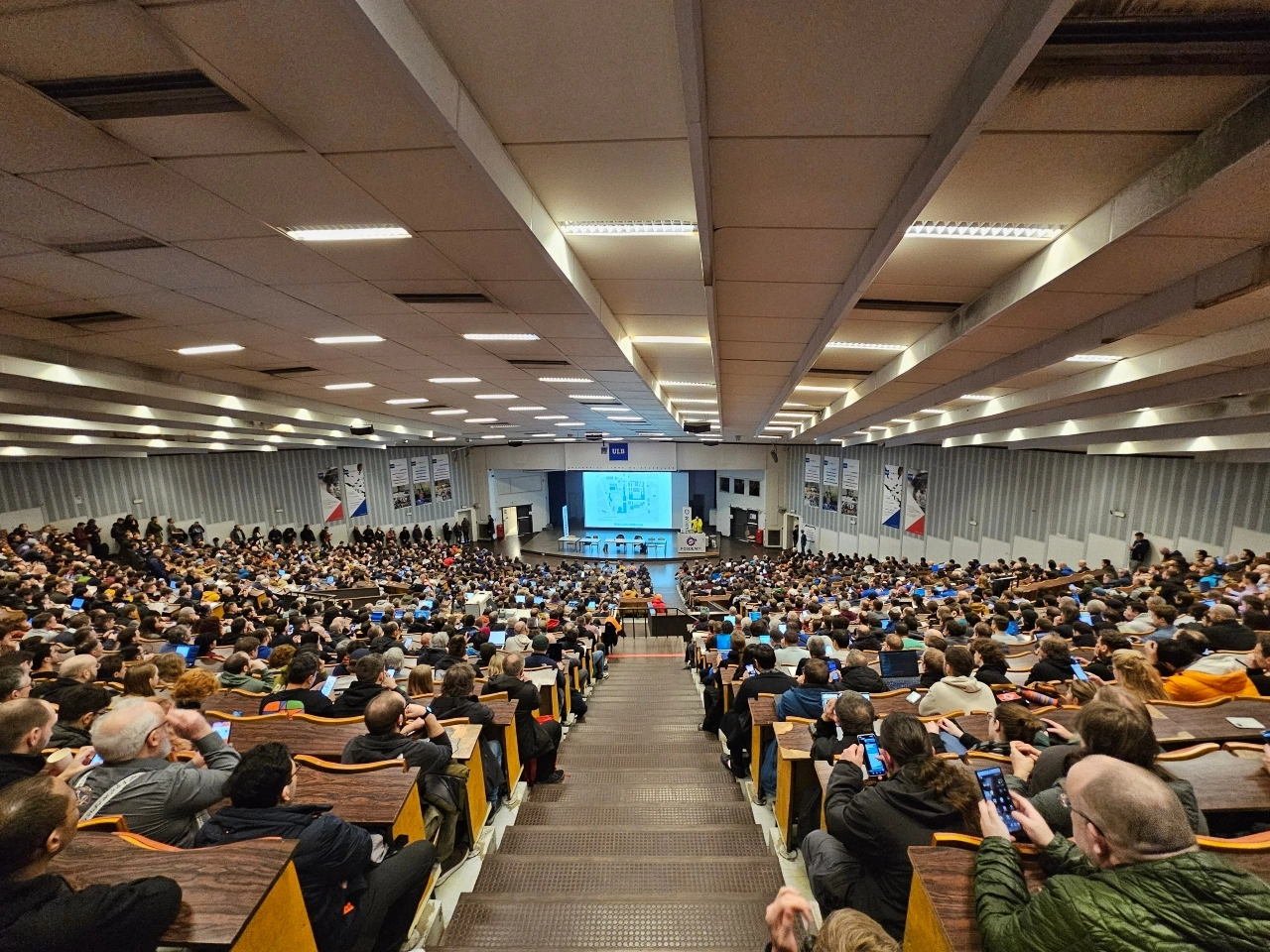
TL;DR – In case you missed it, FOSDEM, the world's largest open-source conference took place last weekend in Brussels. And while I was trying to pitch to have our Volt MEPs speak in the EU Policy sessions next year, the conference organizers announced that they wanted to make FOSDEM more political. Perfect, because it's about time Europe takes open-source more serious.
Democracy is open-source, authoritarianism is proprietary
I often pitch why to join Volt by arguing that democracy is like open-source. Think about it: we live in a democracy and it just works (more or less) without you having to vote or being active in a political party. Up to a certain point. In software, open-source solutions risk to break if they are not improved to keep up with technical development, or if they don't have contributors and stewards ensuring they stay course. In the worst case, they are taken over altogether.
In a democracy this can happen, too. The endgame is someone like Trump getting elected and transforming democracy into a different system. Open-source software becoming proprietary means you may have pay to use it, you may loose access, you don't know what data the software collects and how it's being used and used against you. The analogy is there: democracy needs contributions. Small ones, like a vote. Bigger ones, like being active in a political party.
United in diversity requires interoperability
The other example I use is languages. You can look up the grammar and vocabulary of any language, learn it, and speak it. Now imagine languages would not be open-source. Like trying to talk to aliens. We have 27 member states and over 20 spoken languages in Europe. The same is true in technologies where we do not have EU-wide monoliths, but a gigantic ecosystem of competitive technologies.
You may argue, that Europe needs monolithic standards to compete, but it would be like Spain asking everyone to speak Spanish (sorry, Catalonia) or the EU forcing everyone to speak Latin, Esperanto, English or whatever. Not gonna work. I believe our European DNA should not be reformatted this way, but rather, we should embrace our diversity also with regards to technology. And this requires the EU to double down on open-source. Because if our different systems can be taught to "speak" with each other, they could match any hyperscaler.
To get there, we need to break the information asymmetry: Europe has the solutions to be sovereign and competitive. It requires the technical awareness on political level, where governments often default to foreign providers because they were taught nothing else exists. And it requires the political drivers on technology level, because open-source solutions may be interoperable but integrating them often also requires political will. FOSDEM is making the right call by hopefully pushing for both.